We're on the cusp of something genuinely unprecedented, and we all feel it. The volume and depth of creative output from the LLMs we're using daily is truly astonishing, and we know this is the worst it'll ever be.
It doesn't just give me a run for my money in my own field. It's simultaneously a better plumber, drywaller, accountant, proto-philosopher and amateur beer-brewer than I am. Eat your heart out, Leonardo da Vinci.
We've got brilliant tools and brilliant agentic workflows. We can marshal veritable armies of little coding and writing bots and point them at almost anything. And yet there's a specific, strange thing happening in the vibe-coding era. Let me see if this blunt characterization hits a note for any of you:
- Self-authored apps: 23
- Customers: 0
- Revenue: $0
Not quite the cachet you'd expect from someone wielding the most powerful technology of all time.
* * *
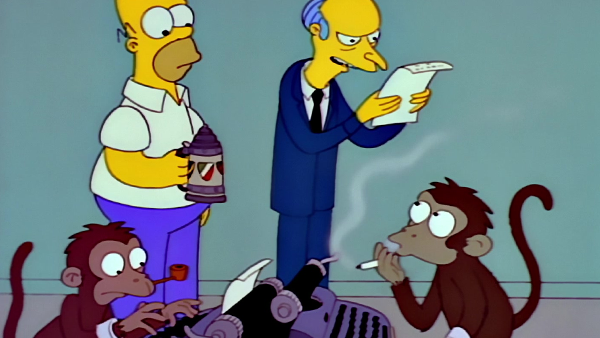
There was an old thought experiment, the infinite monkey theorem, suggesting that given an infinite number of monkeys erratically hitting an infinite number of keys on typewriters for an infinite amount of time, you'd eventually arrive at the works of William Shakespeare. Given infinite horsepower and a complete runway of forever, the probability of eventually landing on genius was purely inevitable. You could simply brute-force poetic genius, rather than doing the frankly old-fashioned and completely misguided thing of writing it oneself. How embarrassing.
I argue we're witnessing something quite distinct in the vibe-coding zeitgeist right now. I call it judgment decoupling. We've democratized incredible tools that now allow normies and amateurs to wield very powerful technology. But the lessons, coordination and judgment from the historical mastery of these tools is now visibly uncoupling from one's ability to wield them. That should make us excited, but also nervous.
* * *
Here's the scenario that makes it concrete. Somewhere in the 2010s app boom, most of us had the conversation, at a dinner or at a party, about a killer app idea. There was so much money in mobile that if you could just get the thing off the ground before anyone else, it would print millions.

Cool fantasy. But pre-2022, the reality of it looked very different. Are you hiring developers? Scoping a plan? Funding it yourself or chasing investors? "Do it cheap and outsource," fine, are you willing to pay for that, and manage it? What about security? Before you've even finished your drink, the fantasy is slamming into the dashboard of reality. And none of those prerequisite questions would survive contact with serious funding without real market research.
Which is to say: the idea died. Right there, on the vine, at the party. And nobody seriously committed a lifetime of capital on their cousin's wacky weed-delivery app idea.

That's the part worth sitting with. The reason we weren't already drowning in a swamp of momentum-less apps is that the gate was doing you a favour. "What you didn't know how to do" was a structural advantage. It kept your hard-earned money out of a fly-by-night idea. The friction wasn't the obstacle. The friction was the filter.
Bad ideas used to die at the gate. Now they're getting murdered right in the arena. We used to try to avoid putting the cart before the horse, now we're mass-shipping polished horseless carts.
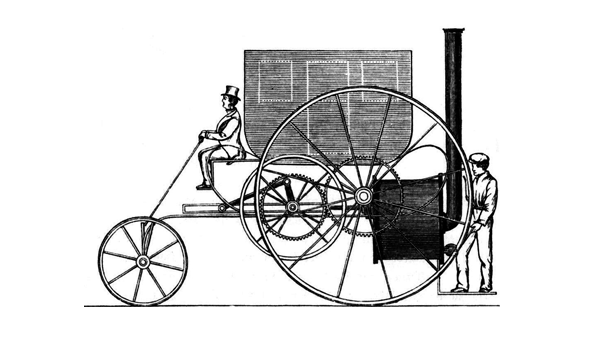
The gate is gone, and it's not coming back. Anyone can build now, which means the idea no longer dies cheaply at the party. It gets built, funded with real hours and real money and real ego, and then meets the only judge left standing: the market. Same death. Later, costlier, and in public.
* * *
For most of history, judgment was intrinsic to learning to do a thing. In most trades and most professions, the real education isn't what you learn how to do. It's what you learn how not to do. Becoming a senior economist, a developer, a plumber gave you hands-on skill, yes, but it also handed you judgment on the way: how to read a landscape, manage a stakeholder, spot the deal that will never fund, walk away from the job that's more trouble than it's worth. You didn't take a class in that.
As you learned, you absorbed many more lessons than just linearly fixing pipes or running analyses. You curated a sense of judgment, an almost ambient intuition about the true nuances of your project. LLMs have truly just severed the inherent bundling between judgment and execution. We've handed everyone open keys to frictionlessly execute, but the glaring gap is whether the proverbial juice is worth the robotic squeeze.
* * *
Two hundred years ago, Mary Shelley's Frankenstein bore a serious warning about the dangers of unchecked scientific ambition. And of course, this wasn't so much a warning about the monster (oft-confused) but the builder.
Dr. Frankenstein was so consumed with playing god and wielding his powers that he didn't stop to think about what he truly was creating.
Victor abandons the creature, condemning it as hideous. The monster is not intrinsically violent, but becomes that way after facing persistent rejection, horror and isolation.
How couldn't he see, on construction, that stitching together the random parts of fresh corpses would create a godless monstrosity?

* * *
The brutal irony as well is that the tools will not save you here. It's been well-cited that many of them tend towards sycophancy, stroking your genius and egging you on rather than reeling you in. It will cheerfully put the bolts in Frankenstein's neck for you.
The restraint and reserve that had to live in the world now has to live in you. Nothing external will stop you anymore. The "gate" moved inside your head, and you're the only one who can man it.
This is not in any stretch an anti-AI post. I'm a heavy user, I'm bullish, and I think you should be too. But I feel the winners will be those who can bring the old-school style of judgment and deliberate curation to the new power.
If execution is free, and widely available to everyone, then judgment is the whole price. Maybe it always was.
Shipping faster than you can judge?
Execution is cheap now. Knowing what's worth building — and what to kill at the gate — is the part that still pays. That's the conversation we have.
Let's Talk