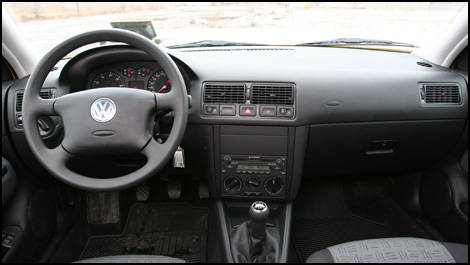
My first car was a 1996 Honda Civic SI. Off-green, $1,800, and I drove it until the only working window was the sunroof. After that came a 2007 City Golf - my first "real adult" car. Then a manual Toyota Yaris that I've been driving for nearly a decade.
I loved the manual transmissions. I was a musician at the time, and the tactility of operating the car felt seductive - the physical connection between intention and execution, the feedback loop of clutch and throttle, the satisfaction of a perfectly matched gear.
Now I'm looking to upgrade to something bigger. Maybe a crossover, maybe an SUV. And here's the problem: in North America, finding a manual transmission SUV that isn't a Jeep (gag) is becoming a rare art form. The manuals are disappearing.
The Automation Assumption
The argument for automatic transmissions is unassailable: they're more efficient, more reliable, easier to drive. Nobody needs to row gears anymore. We solved this problem in the 1950s. Manual transmissions are objectively suboptimal.
And yet.
To people who've only driven automatics, manual transmission enthusiasm sounds whimsical - a nostalgic affectation, like collecting vinyl records or writing with fountain pens. But anyone who's actually driven manual knows: the soul of driving is in those gears.
The physical act of modulating the clutch, matching revs, feeling the engine through the shifter - this isn't inefficiency. It's engagement. It's the difference between operating a machine and being connected to it.
We're losing this distinction everywhere.
The Overstimulation Crisis

We live in an overstimulated society, and anecdotally, we're reaching a boiling point. I've seen Instagram Reels where people say "watching TV without my phone makes me feel like a monk." TikTok is liquidating our attention spans at rapid pace. People are finding more reasons to completely offload their cognitive load into passive consumption.
We know we're overstimulated. It's not controversial. Everyone agrees. And yet we keep optimizing for more automation, less friction, easier everything.
The data confirms what we feel: A 2015 Microsoft study found human attention spans dropped from 12 seconds in 2000 to 8 seconds by 2015 - shorter than a goldfish. UCLA research shows college students now focus on single tasks for barely over a minute before switching. We're not imagining this. It's measurable.
The irony: we're automating away the things that make us feel human.
Manual transmissions force you to pay attention. You can't text and drive manual. You can't zone out in traffic. You have to be present - feet, hands, eyes, brain all coordinating in real-time. It's a forcing function for engagement.
And it turns out, engagement is what we're starving for.
What This Means for Marketing
This is the exact tension in performance marketing right now.
Everyone's racing toward full automation:
"Let Google's AI handle bidding! Use Performance Max and let the algorithm figure it out! Stop micromanaging campaigns, just set it and forget it!"
And for many businesses, this works. Automation is more efficient at scale. The algorithms are better at optimization than humans making daily bid adjustments.
But here's what gets lost: understanding.
When you fully automate campaign management, you stop knowing why things work. You lose the tactile connection between input and output. You can't feel when something's wrong because you're not touching the gears anymore.
The platform reports: "Your CPA is $200."
But you don't know:
- Which traffic sources are driving quality vs junk
- What audience signals actually convert
- Where your budget is being wasted
- Why performance suddenly shifted last Tuesday
You've traded control for convenience. And for many businesses, that trade is deadly.
Both Hands on the Wheel
This is why we talk about "both hands on the wheel" in our positioning. It's not about rejecting automation - automatics are better for most driving. It's about knowing when to keep manual control.
Some things are worth delegating:
- Bid adjustments every 15 minutes (let the algorithm do this)
- Cross-channel budget pacing (machines are better at math)
- Creative testing permutations (too many combinations for humans)
Some things you want to keep control of:
- Campaign structure and strategy (humans understand business context)
- Budget allocation across channels (requires judgment, not just math)
- Qualification criteria and conversion value (you know your customers, platforms don't)
The skill isn't in optimizing everything. It's in knowing what to optimize and what to control.
The Soul of the Work
When I'm looking for a new car, I could get an automatic. It would be easier. More people could drive it. Resale value would probably be higher.
But I'm keeping the manual because driving matters to me. Not just getting from A to B - the actual act of driving. The engagement. The connection. The requirement to be present.
The same applies to your marketing.
You could fully automate everything. Set Performance Max to "Maximize Conversions" and walk away. Let the platform figure it out.
But if marketing matters to you - if you treat it as capital deployment, not just a utility - then you want both hands on the wheel. You want to feel the gears. You want to know exactly what's happening and why.
Save the Manuals
I'm thoughtfully redesigning my life to take back things that matter. Some things truly are worth delegating. Some things you want to keep in control, even if they're not "optimal."
The manuals are disappearing. Not because they're bad, but because optimization culture assumes easier is always better.
It's not.
Sometimes, the friction is the point. Sometimes, the engagement is the value. Sometimes, you want to feel the machine respond to your inputs instead of just trusting it knows better.
This isn't nostalgia. It's intentionality.
And in marketing, just like driving, the soul of the work is in the gears you choose to keep.
Save the manuals.
Ready to Take Back Control?
Let's talk about which parts of your marketing deserve human judgment and which can be safely automated.
Schedule a Strategy Session